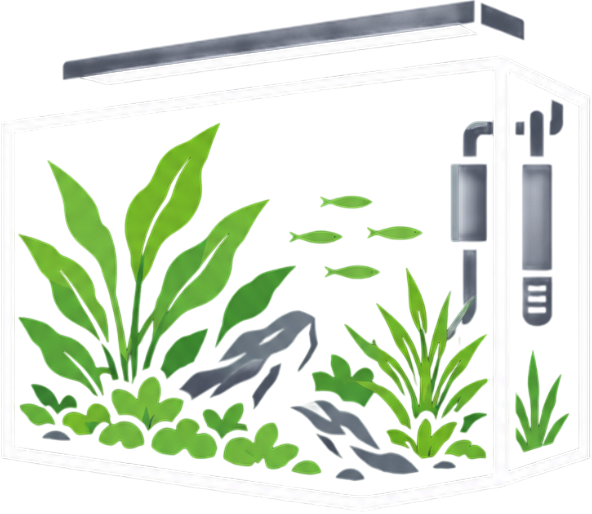

Planted Tank Lighting Compared - Matching PAR to Your Plants
Light is the input that everything else in a planted tank has to keep pace with. Add more or stronger light and plants photosynthesize faster, which means they pull more CO2 and nutrients from the water to keep up, or start showing deficiencies and algae if the rest of the system can't supply them. Too little light and even easy plants grow slowly and stretch toward the surface. The fixture you choose sets the ceiling for how much you can grow, and how demanding the rest of the tank needs to be to support it.
There are five lighting setups you will run into on planted tanks: legacy fluorescent tubes, standard LED bars, high-output full-spectrum LEDs, app-controlled programmable LEDs, and simple DIY clip-on lamps. Below is a full comparison of how they perform, what they cost to buy and run, and which tanks they suit best.
How planted tank lighting actually works
Plants use light across the visible spectrum, but chlorophyll responds most strongly to red and blue wavelengths, which is why many grow-focused fixtures lean toward a purple-pink or warm-cool mix rather than pure white. What matters for growth is PAR (photosynthetically active radiation), the intensity of usable light actually reaching the plants at substrate level, not just the fixture's wattage or lumen rating. PAR falls off sharply with tank depth and distance from the light, which is why the same fixture can be low light on a tall tank and high light on a shallow one. Photoperiod, the number of hours the light runs per day, matters just as much as intensity: more hours of light without matching nutrients and CO2 just gives algae more time to compete with your plants.
Comparison at a glance
| Lighting type | Light output | Spectrum control | Best light level | Running cost | Typical cost | Best tank |
|---|---|---|---|---|---|---|
| T5/T8 fluorescent tube | Moderate | Fixed, set by tube choice | Low-medium | Moderate (tubes draw more power, need replacing yearly) | $30-80 | Budget or low-tech tanks |
| Standard LED bar | Moderate-good | Limited, often a fixed white/blue mix | Low-medium | Low | $25-70 | Easy, low to medium light planted tanks |
| High-output full-spectrum LED | High | Good, often tunable channels | Medium-high | Low-moderate (high intensity draws more power) | $80-250 | High-tech, carpet or red-plant tanks |
| App-controlled LED | Moderate-high | Excellent, full custom spectrum and sunrise/sunset | Low-high, fully adjustable | Low | $100-300 | Keepers who want fine control and scheduling |
| DIY clip-on LED | Low-moderate | Fixed, whatever bulb is fitted | Low | Low | Under $20 | Nano tanks, low-light setups |
T5/T8 fluorescent tube lighting
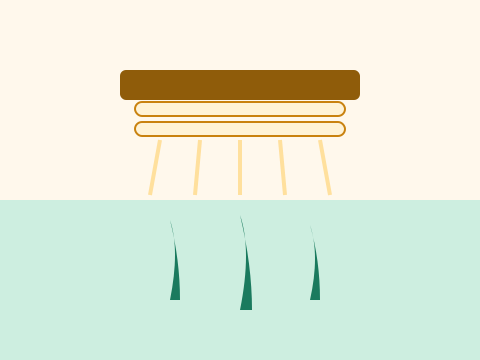
The long-standing standard before LEDs took over, this fixture holds one or more fluorescent tubes, often paired for higher output, suspended or resting on a hood above the tank.
Properties
- Even, wide spread of light across the whole tank surface with multiple tubes.
- Tubes gradually lose output over months even before they visibly dim, and need replacing roughly once a year to keep intensity consistent.
- Runs warmer and draws more power than an equivalent LED fixture.
- Spectrum is fixed by the tube purchased, so changing color temperature means swapping tubes.
- Widely available and often the cheapest way to light a larger tank.
Still a workable option, especially on tanks already fitted for tubes, but most new setups now choose LED for lower running costs and longer fixture life.
Standard LED bar
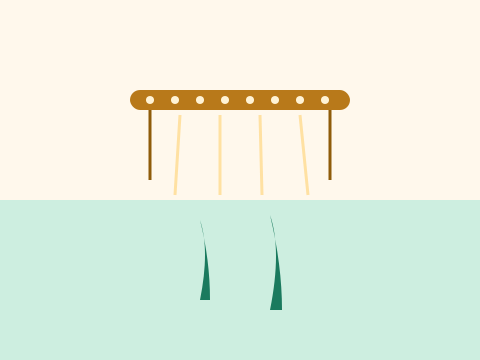
The modern default for casual planted tanks: a slim bar packed with diodes, resting on rails or legs above the tank, usually with a simple fixed or basic dimmable white and blue mix.
Properties
- Low power draw and low heat output compared to fluorescent tubes.
- Diodes last for years without the yearly replacement fluorescent tubes need.
- Spectrum and intensity adjustment is limited on most budget models, often just a single dimmer.
- Slim profile keeps the tank's top opening clear and looks tidy on most setups.
- Covers easy, low-demand plants well, but can fall short for high-light or red-leafed species.
A solid, low-maintenance choice for anyone growing easy, forgiving plants without chasing maximum growth rates.
High-output full-spectrum LED
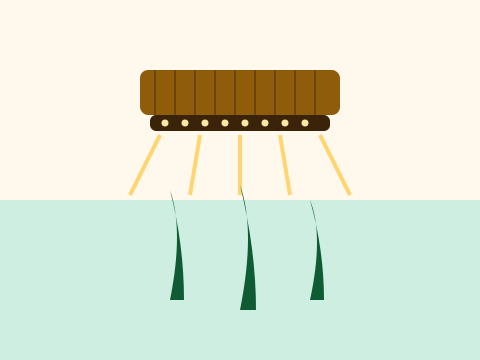
Built for tanks pushing serious plant growth, this style packs a denser diode array, often across multiple color channels, into a larger fixture with a proper heat sink to handle the extra output.
Properties
- Delivers enough PAR to support carpeting plants, high-light stem plants, and red-leafed species.
- Multiple channels usually allow tuning the color mix, not just overall brightness.
- Needs to be paired with adequate CO2 and fertilization, since strong light without them invites algae rather than better growth.
- Larger housing and heat sink than a basic LED bar, and a noticeably higher price.
- Overkill, and possibly counterproductive, on a low-tech tank without supplemental CO2.
The right choice once you are running pressurized CO2 and a full fertilizer routine and want the light to stop being the limiting factor.
App-controlled programmable LED
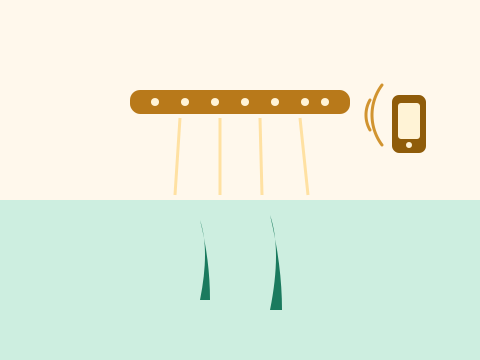
This style pairs LED hardware, ranging from basic to high-output, with a wireless control module, letting you program intensity and spectrum changes throughout the day instead of a flat on/off.
Properties
- Fine control over intensity, spectrum, and timing, often including gradual sunrise and sunset ramps instead of an abrupt switch.
- Schedules and presets remove the need for a separate outlet timer.
- Depends on the app and, for some models, a cloud service staying supported over the years.
- Setup takes longer than a basic fixture, since it involves pairing the module and building a schedule.
- Priced at a premium over an equivalent fixture without smart features.
Worth it for keepers who want to fine-tune both plant growth and the tank's visual appearance throughout the day, rather than a single fixed setting.
DIY clip-on LED lighting
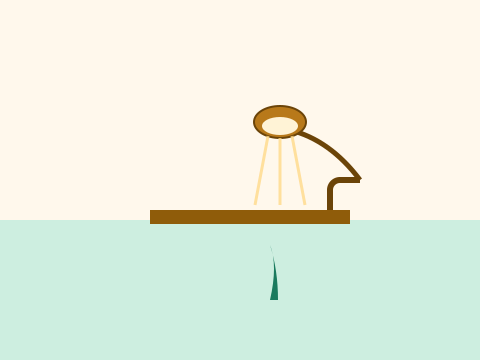
The budget and nano-tank option: a small clip-on lamp, often intended for desks or general use, repurposed or purpose-built for a small aquarium, clamped directly to the rim.
Properties
- Very low cost compared to any purpose-built aquarium fixture.
- Limited coverage area, so it suits small or nano tanks better than anything larger.
- Spectrum and intensity are fixed by whatever bulb or diode is fitted, with little to no adjustment.
- Easy to reposition or remove entirely, useful for tanks that get rearranged often.
- Rarely enough output for anything beyond low-light, easy-care plants.
A practical choice for a nano tank or a low-light setup where a full-size fixture would be overkill.
Choosing the right lighting for your tank
A few practical factors should drive the decision more than brand preference:
- Plant selection. Easy, low-light plants do fine under a standard LED bar or even a clip-on lamp; carpeting or red-leafed high-light plants need a high-output fixture.
- CO2 and fertilization. Strong lighting without matching CO2 and nutrients tends to produce algae rather than better growth, so scale light intensity to the rest of the system.
- Tank size and depth. Larger or deeper tanks need more total output or a higher-mounted, wider-spread fixture to deliver the same PAR at the substrate.
- Control needs. A flat on/off schedule is fine for most tanks; an app-controlled fixture earns its price if you want sunrise/sunset ramps or want to fine-tune spectrum without buying new tubes.
- Budget and running cost. LED options cost less to run than fluorescent tubes over time, even when the fixture itself costs more upfront.
Maintenance tips that apply to every type
- Wipe dust off fixtures and any protective glass regularly, since a thin film can measurably cut the light actually reaching the water.
- Replace fluorescent tubes on a yearly schedule even if they still light up, since output drops well before the tube visibly fails.
- Keep photoperiod consistent, generally 6-10 hours a day, and avoid extending it to compensate for weak output, since more hours of dim light still favors algae over plants.
- Recheck plant growth and algae levels a few weeks after any lighting change, since it takes time for the rest of the tank to show whether the new intensity is balanced.
- For app-controlled fixtures, keep a note of your working schedule outside the app in case of a factory reset or app update.
Final thoughts
There is no single best planted tank light, only the best one for your plants, your tank, and how much you want to fine-tune it. Standard LED bars are the reliable, affordable default for easy, low to medium light setups, while high-output full-spectrum LEDs earn their higher price on demanding, high-tech tanks running full CO2 and fertilization. App-controlled fixtures add scheduling and spectrum flexibility for keepers who want it, fluorescent tubes remain a workable budget option on older setups, and DIY clip-on lamps cover nano and low-light tanks well. Match the fixture to your plants and the rest of your system, and light stops being the thing holding growth back.