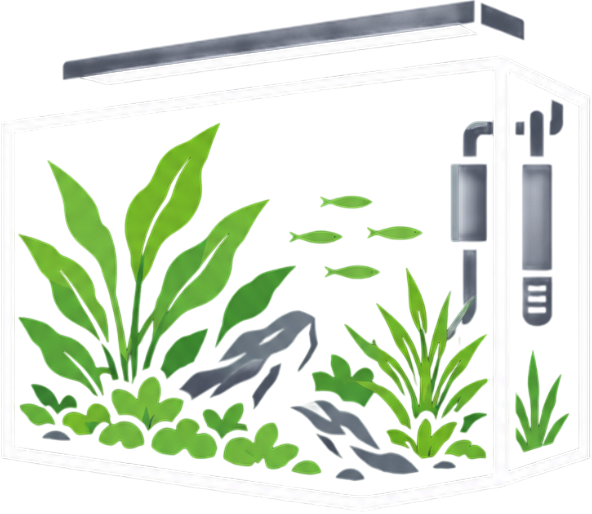

CO2 Drop Checkers Compared - Reading Your Tank's Real CO2 Level
A drop checker is the cheapest reliable way to know how much CO2 is actually dissolved in your water, rather than just guessing from bubble count. It works by trapping a small pocket of air against a pH-sensitive indicator solution: over an hour or two, dissolved CO2 diffuses into that trapped fluid, shifts its pH, and changes its color. Because it reacts to CO2 already in the water rather than gas passing through a diffuser, it tells you what your plants and fish are actually experiencing, several hours behind real time.
There are five drop checker styles you will run into: standard glass bulbs, long-neck models built for easier reading, inline units mounted in the filter tubing, digital pH-based monitors, and simple DIY versions. Below is a full comparison of how they work, what they cost, and which setups they suit best.
How a drop checker actually works
Every glass or DIY drop checker relies on the same chemistry: a small reservoir of indicator fluid, usually a pH dye mixed with 4dKH reference water, sits in an air pocket that is in contact with the tank water. CO2 from the water diffuses into that trapped air and then into the fluid, lowering its pH proportionally to how much CO2 is dissolved. The fluid shifts along a green-is-good gradient, between blue when CO2 is low and yellow when CO2 is too high. Because gas has to diffuse through air and then liquid, the reading always lags actual tank conditions by an hour or more, which is why a drop checker is a trend indicator, not a real-time one. Digital pH-based monitors skip the diffusion lag entirely by measuring the water's pH directly with a probe and calculating dissolved CO2 from pH and carbonate hardness.
Comparison at a glance
| Drop checker type | Reading method | Response lag | Placement | Maintenance | Typical cost | Best setup |
|---|---|---|---|---|---|---|
| Standard glass | Color of trapped fluid | 1-2 hours | Suction-cupped low in the tank | Low (refill fluid every few weeks) | $8-20 | Most planted tanks |
| Long-neck | Color of trapped fluid | 1-2 hours | Suction-cupped near the surface, read at an angle | Low (refill fluid every few weeks) | $10-25 | Tall or deep tanks, easier viewing |
| Inline | Color of fluid in flow | 30-90 minutes | Mounted in external filter tubing | Low-medium (fluid access needs hose disconnect) | $15-35 | Tanks with a canister filter, no in-tank clutter |
| Digital pH-based | Live pH-to-CO2 calculation | Near real-time | Probe hangs in tank, unit mounted outside | Medium (probe calibration and cleaning) | $60-250 | High-tech tanks wanting real-time data |
| DIY bottle-cap | Color of trapped fluid | 1-2 hours | Floating or wedged near the surface | Low (rebuild as needed) | Under $5 | Budget setups, testing the concept |
Standard glass drop checker
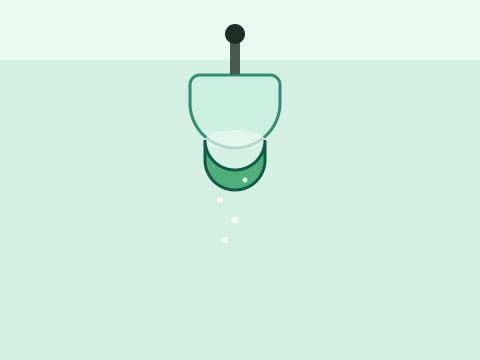
This is the classic design: a small glass dome with a suction cup, holding a shallow well of indicator fluid at its base, mounted low in the tank where CO2 levels matter most to plants.
Properties
- Simple, well-understood design with decades of use in the hobby.
- Suction-cupped inside the display tank, so it is visible and part of the aquascape.
- Reads best against a white or light background behind the glass.
- Fluid needs replacing every few weeks as it evaporates or the reagent degrades.
- The cheapest and most widely available option.
The tradeoff is viewing angle: because it sits low and the fluid pools in a small curved well, it can be awkward to read without crouching down to the tank's level.
Long-neck drop checker
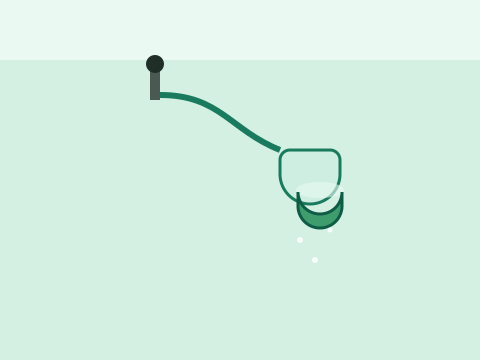
A variation on the standard design, built with an extended curved neck so the suction cup can sit near the top of the tank while the fluid reservoir still hangs down at a useful depth.
Properties
- Easier to read at a glance since the reservoir sits closer to eye level for most tank heights.
- Still relies on the same trapped-air, color-shift chemistry as a standard glass checker.
- Slightly more fragile than a compact design due to the extended glass neck.
- Works particularly well on tall or deep tanks where a low-mounted checker is hard to see.
- Costs a little more than a basic glass unit for the added convenience.
Worth the small premium on any tank where you check CO2 levels daily and want to do it without getting close to the glass.
Inline drop checker

Instead of mounting inside the tank, this style splices into a canister filter's tubing, so water flows past a chamber holding the indicator fluid before continuing on to the aquarium.
Properties
- Nothing visible inside the display tank, which matters for aquascapers.
- Constant flow past the fluid can shorten the response lag compared to a still in-tank unit.
- Requires a canister or sump-style filter with tubing to splice into.
- Refilling the indicator fluid usually means briefly disconnecting the hose.
- Higher cost than a basic glass checker, and installation takes a bit more effort.
A good match for anyone who wants accurate readings without a visible drop checker breaking up the aquascape.
Digital pH-based CO2 monitor
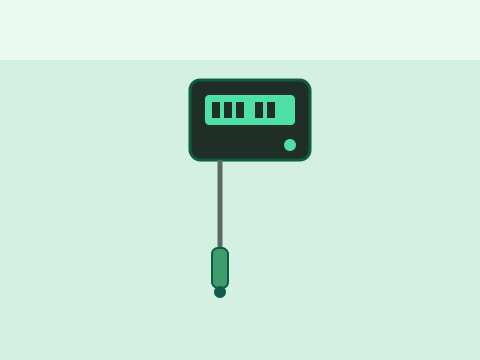
This is an electronic alternative: a pH probe sits in the tank, wired to a unit that calculates dissolved CO2 from pH and your water's known carbonate hardness, updating continuously rather than drifting in color over an hour.
Properties
- Near real-time readings, unlike the inherent lag of any chemical drop checker.
- Requires knowing and maintaining a stable carbonate hardness for the calculation to stay accurate.
- Probe needs periodic calibration and cleaning to stay accurate over time.
- Can often trigger alarms or tie into a controller to shut off CO2 if levels run too high.
- By far the most expensive option, aimed at keepers who want precise, continuous monitoring.
Makes the most sense on large, high-tech, or livestock-sensitive tanks where catching a CO2 spike an hour early is worth the extra cost.
DIY bottle-cap drop checker

The budget option: a small bottle cap or vial, filled with the same indicator fluid used in commercial units, floated or tethered near the surface so it traps its own air pocket against the water.
Properties
- Can be built for next to nothing from a spare cap and a few drops of reagent.
- Chemistry and response lag are identical to a standard glass checker.
- Less stable than a suction-cupped unit, and easy to knock loose or tip over.
- No glass to break, but also no polish, so it looks the part of a homemade tool.
- A fine way to try the concept before buying a dedicated glass unit.
Good for testing whether keeping a constant eye on CO2 is worth the habit before spending on hardware.
Choosing the right drop checker for your tank
A few practical factors should drive the decision more than brand preference:
- How often you check it. A standard or long-neck glass checker is fine for a quick daily glance; an inline unit suits anyone who wants the reading without it being visible.
- Tank height and viewing angle. Tall or deep tanks benefit from a long-neck design that keeps the reservoir readable without crouching.
- Aesthetics. An inline checker is the only style here that stays completely out of the display.
- Risk tolerance. High-value livestock or a hands-off dosing schedule justifies the extra cost of a digital pH-based monitor that reacts in real time instead of an hour later.
- Budget. A DIY bottle-cap version costs almost nothing and teaches the same reading skills as a commercial glass checker.
Maintenance tips that apply to every type
- Replace the indicator fluid every few weeks, since evaporation and reagent breakdown will give a false reading long before the color looks obviously wrong.
- Always read a chemical drop checker against its established color reference, not from memory, since lighting changes how colors appear.
- Remember every chemical drop checker reads CO2 from an hour or more ago, so use it to judge trends over days, not to react to what is happening in the tank right now.
- Keep a digital monitor's probe clean and recalibrate on the schedule the manufacturer recommends, since drift is common with pH probes over months of continuous use.
- Position any in-tank checker somewhere with good light and a clear line of sight, so a glance actually tells you something useful.
Final thoughts
There is no single best CO2 drop checker, only the best one for how closely you want to watch your tank. Standard and long-neck glass checkers remain the reliable, affordable default for most planted tanks. Inline units suit aquascapers who want the data without the clutter, and digital pH-based monitors earn their price on tanks where real-time CO2 tracking actually matters. A DIY bottle-cap version is a fine way to learn the ropes for next to nothing. Match the checker to how often you look, how the tank is viewed, and how much lag you can tolerate, and CO2 dosing stops being a guessing game.