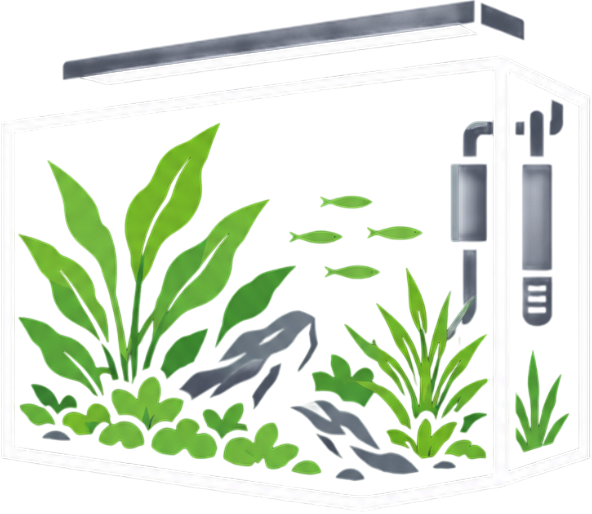

CO2 Regulators Compared - Single-Stage, Dual-Stage and Beyond
A CO2 regulator sits between your gas cylinder and the rest of your setup, and its job is simple to state but hard to get wrong-free: take pressure that can be 800 psi or more inside a full cylinder and turn it into a small, steady working pressure your needle valve and diffuser can actually use. A good regulator holds that output pressure rock-steady as the cylinder empties from full to nearly gone. A poor one drifts, creeps, or dumps gas suddenly, which either starves your plants or gasses your livestock overnight.
There are five regulator setups you will run into when shopping for a pressurized CO2 system: single-stage, dual-stage, mini/paintball-style, solenoid-equipped, and premium dual-gauge precision regulators. Below is a full comparison of how they work, what they cost to buy and run, and which setups they suit best.
How a CO2 regulator actually works
Every regulator's core job is pressure reduction. Gas enters at cylinder pressure, which falls as the tank empties, and passes through a spring-loaded diaphragm that reduces it to a much lower, adjustable working pressure, shown on a low-pressure gauge and fine-tuned further downstream by a needle valve that sets your actual bubble rate. Some regulators do this reduction in a single step; others split it into two stages for a steadier result. A solenoid valve can be added in-line to cut gas flow on and off electronically, usually paired with a timer or controller so CO2 only runs during your plants' photoperiod.
Cylinder size, regulator quality and how far the working pressure drifts as the tank empties all affect how consistent your bubble rate stays between refills, and how much babysitting the setup needs.
Comparison at a glance
| Regulator type | Pressure stages | Output stability | Fine adjustment | Extras included | Typical cost | Best setup |
|---|---|---|---|---|---|---|
| Single-stage | One | Moderate (drifts as cylinder empties) | Depends on needle valve fitted | Sometimes a basic gauge only | $30-70 | Budget or first-time CO2 setups |
| Dual-stage | Two | Excellent, stays flat until cylinder nearly empty | Depends on needle valve fitted | High and low pressure gauges | $80-180 | Anyone who wants a steady bubble rate long-term |
| Mini / paintball-style | One (simplified) | Low-moderate, small reservoir empties fast | Basic, often coarse | Small single gauge | $20-45 | Nano tanks, portable or temporary setups |
| Solenoid-equipped | One or two (add-on) | Matches base regulator stage count | Depends on needle valve fitted | Electronic on/off valve, needs a timer | $60-200 | Any tank where CO2 should run on a schedule |
| Dual-gauge precision | Two | Excellent, built for fine control | Very fine, often brass micro-adjust | Dual gauges, bubble counter, sometimes solenoid | $150-350+ | High-tech or large planted tanks |
Single-stage regulator
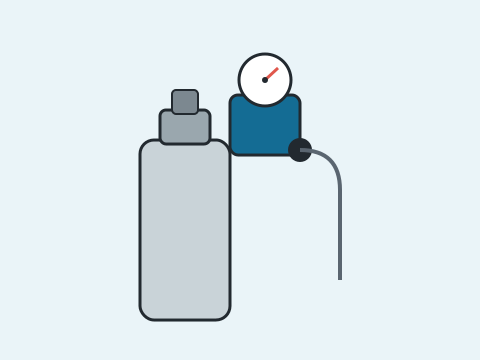
This is the most common entry point into pressurized CO2: one diaphragm stage reduces cylinder pressure straight down to working pressure, feeding a needle valve and then your diffuser.
Properties
- Reduces pressure in a single mechanical step, which keeps the design simple and affordable.
- Working pressure can creep slightly as cylinder pressure falls, especially once the tank drops below roughly a quarter full.
- Usually includes just one gauge, or occasionally none, depending on the model.
- Works fine for most home tanks as long as you check the bubble rate periodically.
- The cheapest reliable way to get started with pressurized CO2.
The main downside is that "set and forget" is only mostly true: a single-stage unit can need a small needle valve tweak partway through a cylinder's life to keep bubble rate consistent.
Dual-stage regulator
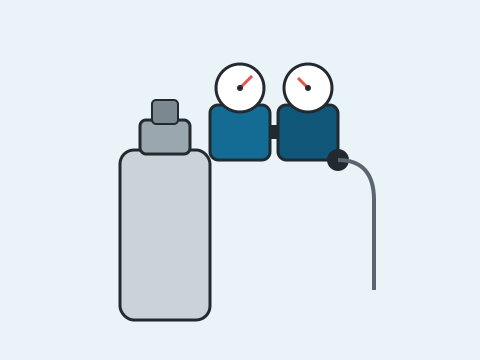
A dual-stage regulator splits pressure reduction into two chambers: the first stage drops cylinder pressure to an intermediate level, and the second stage brings it down to final working pressure. That extra step is what keeps output pressure nearly flat for the entire life of the cylinder.
Properties
- Two reduction stages mean working pressure barely moves as cylinder pressure falls, right up until the tank is close to empty.
- Almost always includes both a high-pressure (cylinder) gauge and a low-pressure (working) gauge.
- Bubble rate stays consistent for weeks or months without needing to revisit the needle valve.
- Larger and heavier than single-stage units, and costs noticeably more.
- Considered the standard for anyone serious about a stable, low-maintenance CO2 system.
The extra cost buys peace of mind: once dialed in, a dual-stage regulator is one of the few parts of a planted tank you can genuinely stop thinking about.
Mini / paintball-style regulator
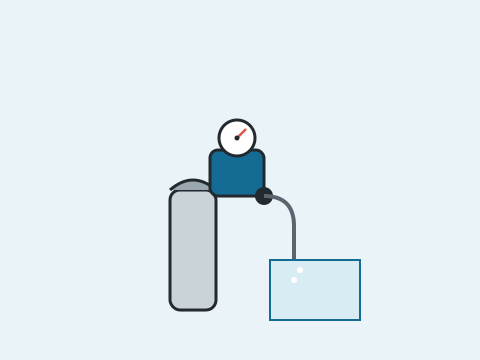
Built for small cylinders rather than standard 5 or 10 lb tanks, this style threads directly onto a paintball-sized CO2 cartridge and is aimed at nano tanks or anyone testing CO2 before committing to a full cylinder setup.
Properties
- Compact and lightweight enough to sit right next to a nano or desktop tank.
- Small cartridges empty quickly, so refill or swap frequency is much higher than a standard cylinder.
- Adjustment is usually coarser than full-size regulators, making fine bubble-rate control harder.
- Cheapest way to get into pressurized CO2, and needs no cylinder deposit or dedicated space.
- Not intended for larger or heavily planted tanks, where cartridge life becomes impractical.
It is a good low-commitment way to try pressurized CO2 or to run a single small tank, but most keepers outgrow it once they add more plants or a second tank.
Regulator with electronic solenoid
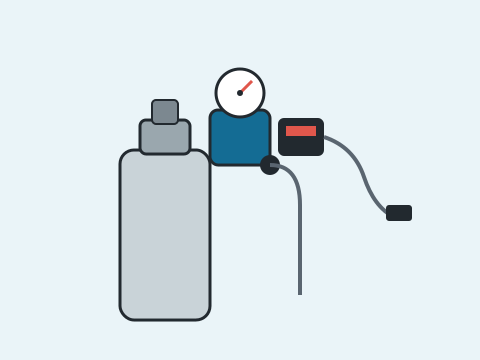
A solenoid is an electronically controlled valve, either built into the regulator or added as a separate fitting, that opens and closes the gas path. Paired with an outlet timer or a controller tied to your lighting, it lets CO2 run only during the photoperiod, when plants can actually use it.
Properties
- Can be added to either a single-stage or dual-stage base regulator, and inherits that stage's pressure stability.
- Requires a timer or controller and a power outlet near the tank.
- Stops CO2 injection overnight, which reduces gas waste and lowers the risk of low dissolved oxygen or a CO2 overdose while plants aren't photosynthesizing.
- Adds a point of electrical and mechanical failure, so periodically check that it still opens and closes cleanly.
- Available as a factory-integrated option on many mid-range and premium regulators, or as a bolt-on add-on for existing ones.
This is less a distinct regulator "type" and more an essential upgrade for any pressurized system run on an automatic light schedule, which describes most planted tanks.
Dual-gauge precision regulator

This is the enthusiast tier: a dual-stage core paired with a fine, often brass, micro-adjust needle valve, quality gauges, and frequently a built-in bubble counter or solenoid as standard equipment rather than an add-on.
Properties
- Dual-stage design gives the same flat output pressure as a standard dual-stage regulator.
- The needle valve allows much finer bubble-per-second adjustment than budget units, which matters on tanks that need a very specific, low bubble rate.
- Often bundles a bubble counter, solenoid, and sometimes a check valve in one unit.
- Built with higher-grade brass and machining, which shows up in smoother, more repeatable adjustment over years of use.
- The highest cost of the group, and more than most low-tech or casual setups need.
Worth the premium on larger or high-tech planted tanks where exact CO2 dosing matters, or simply for keepers who want the best components available and plan to keep the regulator for a decade or more.
Choosing the right regulator for your tank
A few practical factors should drive the decision more than brand preference:
- Cylinder size and setup type. Standard 5-20 lb cylinders pair with single-stage or dual-stage regulators; small cartridges pair with mini regulators built for that thread size.
- How much you want to babysit it. A single-stage unit is fine if you don't mind an occasional needle valve check; a dual-stage regulator is worth the extra cost if you want to set it and forget it.
- Automation. If lights run on a timer, a solenoid-equipped regulator (or a solenoid add-on) is close to mandatory for keeping CO2 in sync with the photoperiod.
- Precision needs. Larger, heavily planted or high-tech tanks benefit from a fine needle valve and a dual-gauge precision regulator; a simple tank with a couple of easy plants does not need that level of control.
- Budget. Mini and single-stage regulators are cheapest up front; dual-stage and precision units cost more but reward you with stability and finer control over the system's life.
Maintenance tips that apply to every type
- Check the working pressure gauge periodically, especially on single-stage units, and nudge the needle valve back to your target bubble rate if it has drifted.
- Test for leaks at every fitting with a drop of soapy water whenever you swap a cylinder; bubbles forming at a joint mean it needs tightening or a new washer.
- If running a solenoid, confirm it fully closes when the timer cuts power, since a solenoid stuck open will drain a cylinder and overdose CO2 overnight.
- Keep a spare cylinder or know your refill turnaround time, since an empty cylinder with no warning is the most common way CO2 dosing gets interrupted.
- Store spare regulators or unused cylinders somewhere dry, since moisture and pressure fittings do not mix well over time.
Final thoughts
There is no single best CO2 regulator, only the best one for a given setup. Single-stage regulators are the affordable, reliable default for most first-time pressurized systems. Dual-stage and precision regulators earn their higher price on tanks where stability and fine control matter most, and a solenoid is worth adding to almost any setup running on a light timer. Mini regulators remain a good low-commitment option for nano tanks or anyone still deciding whether pressurized CO2 is worth it. Match the regulator to your cylinder size, automation needs, and tolerance for occasional adjustment, and the rest of your CO2 system becomes far easier to keep steady.